Step
01
Cell Overheat
Internal cell temperature exceeds safe threshold. Begins in seconds from mechanical damage, overcharge, or manufacturing defect.

The risks you need to understand
Thermal runaway, toxic gas emission, and fire propagation are not theoretical risks. For vessel operators, they are flag state, insurer, and survey-schedule realities.
The Thermal Event Sequence
A lithium battery thermal event follows a predictable sequence. Understanding it is the first step to understanding why certification matters – and why containment design is not optional.



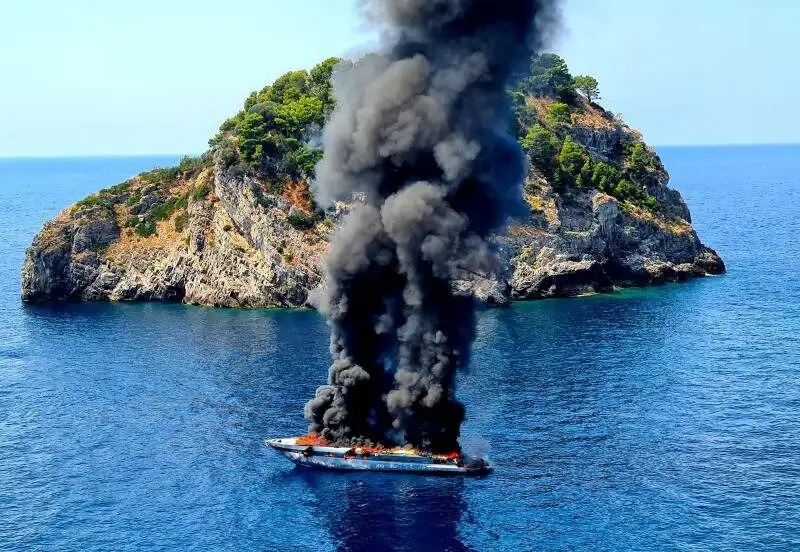
Thermal runaway is the point at which a lithium battery cell enters an uncontrollable self-heating state. The heat from the reaction triggers further reactions, creating a positive feedback loop that cannot be interrupted by external cooling or battery management systems.
A lithium battery thermal event produces hydrogen fluoride (HF), carbon monoxide (CO), carbon dioxide (CO₂), and other volatile organic compounds. HF is acutely toxic at concentrations of less than 10ppm – well below detectable odour thresholds.
An uncertified enclosure provides no guaranteed containment. It may be constructed from materials that contribute fuel to a thermal event, have insufficient venting, and provide no alarm interface for the vessel's systems. The result is an uncontrolled fire in a confined space.
Type Approval by Lloyd's Register means a product has been independently tested and verified to perform as claimed under defined conditions. It is not self-certification or manufacturer testing – it is third-party engineering approval accepted by class surveyors globally.
MGN 681 is a UK MCA Marine Guidance Note – compliance is strongly recommended for vessels operating under UK flag or MCA recognition, and is effectively required by insurers. Its provisions are increasingly referenced by other flag states and classification societies.
Use our free Safety Scorecard to evaluate your current lithium battery installation against Lloyd's Register requirements.